November 7, 2025

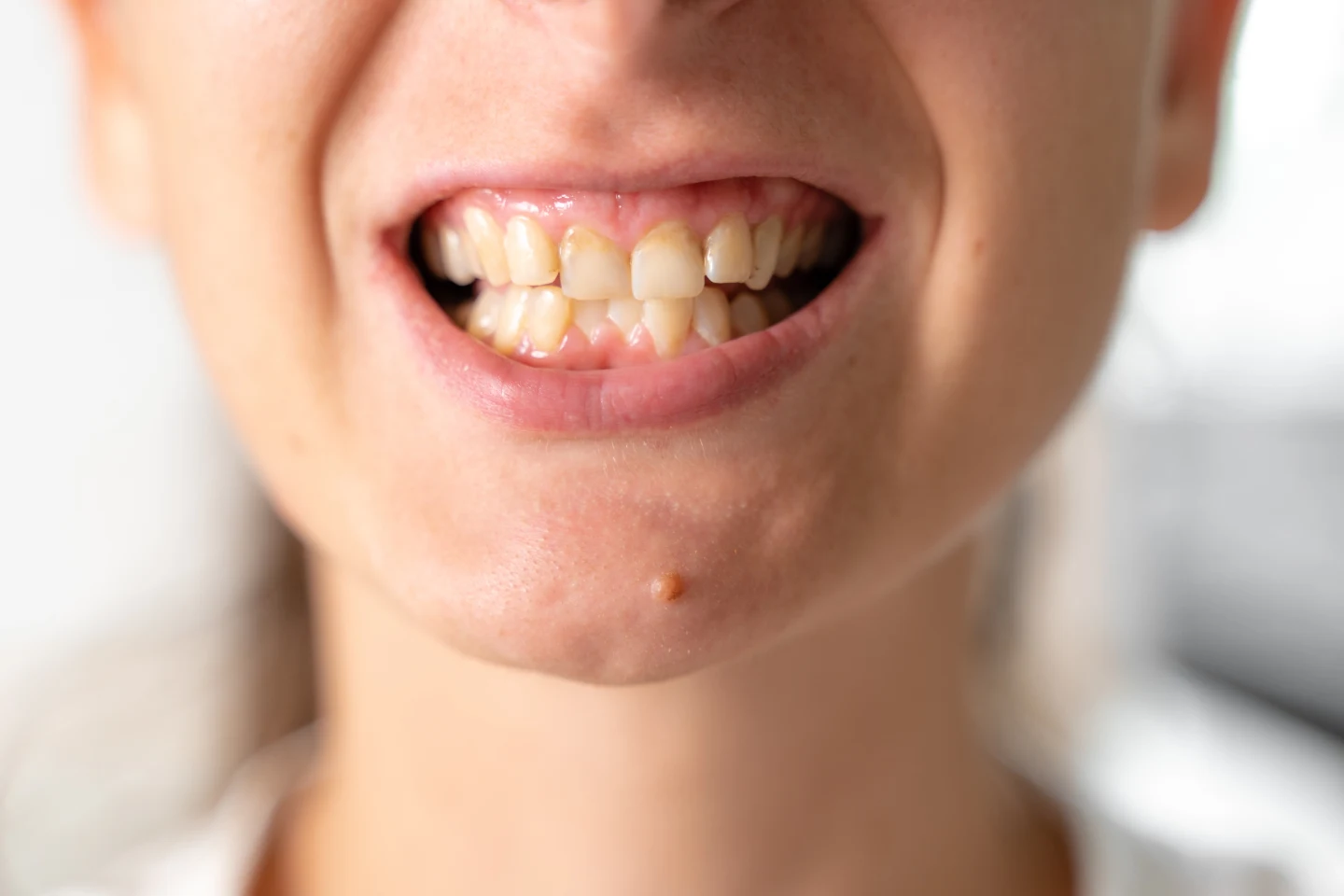
If you’ve ever looked in the mirror and wished your teeth were just a little straighter but didn’t want braces, you're not alone. One of the most common questions we hear from patients in London is: can you get composite bonding on crooked teeth?
We recently treated a patient who came in feeling frustrated about mildly crooked front teeth. She didn’t want months of orthodontic treatment and was looking for a quicker solution. After assessing her case, we used composite bonding to reshape and align the appearance of her teeth in just one visit. The result? A natural-looking smile and a huge boost in her confidence.
So yes, composite bonding on crooked teeth is possible, but it depends on the severity and your specific dental condition.
Composite bonding is a cosmetic dental procedure where a tooth-coloured resin is applied, shaped, and polished to improve the appearance of teeth.
Think of it like sculpting your smile, instead of moving teeth, we reshape what’s already there to create a straighter look. If you're exploring this treatment in more detail, here’s a complete guide on composite bonding treatment in London.
The honest answer: Yes—but with limitations.
You can have composite bonding on crooked teeth if the misalignment is mild to moderate. It’s an excellent option for improving aesthetics without braces.
It works best for:
It may NOT be suitable for the following:
According to the British Academy of Cosmetic Dentistry, cosmetic treatments like bonding are best used for aesthetic improvements rather than functional corrections.
Here’s a simple step-by-step breakdown:
The entire process usually takes 30–90 minutes per tooth.
This is where many patients get confused.
Composite Bonding:
Orthodontics (Braces/Aligners):
Think of bonding as a cosmetic shortcut, while braces are a structural fix. If you're curious about what causes alignment issues in the first place, this article on why teeth become overlapping over time explains it well.
In many cases, we recommend a combination approach—straightening first, then refining with bonding.
Benefits:
Limitations:
If you’re concerned about safety, you can read more about whether composite bonding affects tooth structure before deciding. According to the NHS, long-term dental health depends on proper alignment, not just cosmetic appearance.
Typically, composite bonding lasts:
To extend its lifespan:
Yes—when done by a qualified dentist, composite bonding is safe and widely used.
It preserves most of your natural tooth structure and is reversible in many cases. For a deeper understanding of smile design principles, this resource on creating a balanced and aesthetic smile design is helpful.
However, improper application can lead to:
That’s why choosing an experienced cosmetic dentist is crucial. For additional clinical insights, you can also refer to this British Dental Association guide on cosmetic dentistry treatments.
You’re a good candidate if you:
You may not be suitable if:
So, can you get composite bonding on crooked teeth? Absolutely, but only if your case is suitable. It’s one of the fastest ways to improve your smile without braces, especially for mild imperfections. But it’s not a one-size-fits-all solution.
The best approach? Get a professional assessment and choose a treatment that balances aesthetics, function, and long-term health. Just like the patient we mentioned earlier, the right treatment can transform not just your smile but your confidence too.
Can you have composite bonding on crooked teeth without braces?
Yes, if the misalignment is mild. Bonding can improve the appearance without moving the teeth.
Does composite bonding make teeth look straight?
Yes, it creates the illusion of straight teeth by reshaping and contouring them.
Is composite bonding better than Invisalign for crooked teeth?
It depends. Bonding is quicker for cosmetic fixes, while Invisalign corrects actual alignment and bite issues.
Can severely crooked teeth be fixed with bonding?
No, severe cases usually require orthodontic treatment before cosmetic procedures.
How long does composite bonding for crooked teeth last?
Typically 5–7 years, depending on care and lifestyle habits.
I have just completed Invisalign treatment here and am thrilled with the results.


I have been seeing Monik at Freshdental for a while now and couldn't be happier with the service. I have just completed Invisalign treatment here and am thrilled with the results. Have recommended Monik to many of my friends & family and will continue to do to.


Freshdental London Limited is an Appointed Representative of Financing First Limited, which is authorised and regulated by the Financial Conduct Authority. Freshdental London Limited is a credit broker, not a lender. The provider of a payment scheme which is not offered through or by Financing First Limited may not be so authorised and regulated.


